


You started your business because you were good at something.
And then somewhere along the way, the internet informed you that you were also supposed to become a full-time content creator.
Post consistently. Make Reels. Show your face. Write the caption. Respond to comments. Keep up with trends. Learn whatever Instagram changed this week. And, ideally, go viral while you’re at it.
It is exhausting.
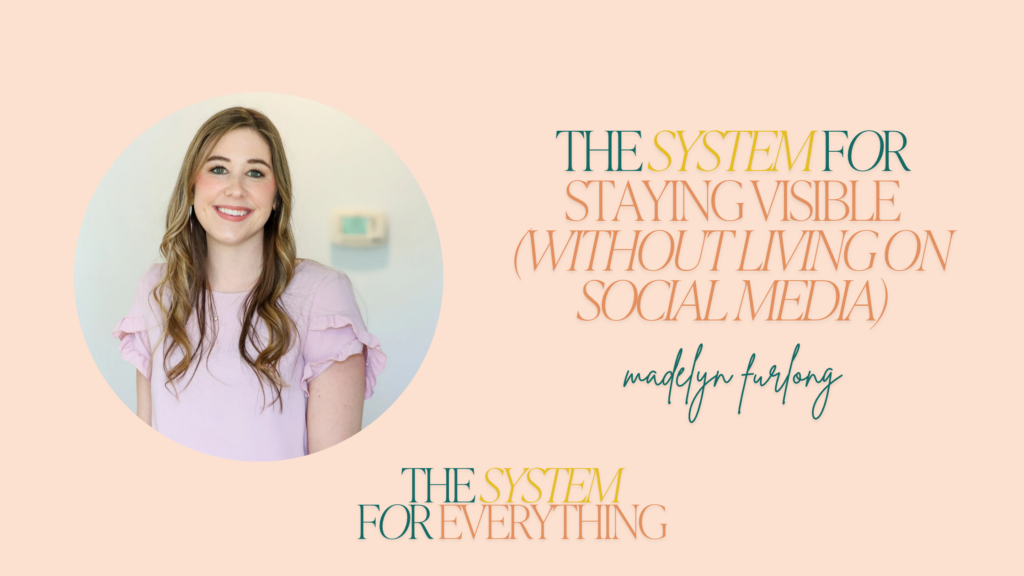
Madelyn Furlong has built her business around helping entrepreneurs stop treating marketing like an emergency and start treating it like a sustainable system. In this episode, we talk about what consistency actually needs to look like, why virality isn’t the business strategy people sometimes hope it will be, and how to create content without spending your entire life thinking about content.
Review the Transcript
Julie Fried (00:00.158) Today’s system tip, not every post needs to break the internet. Some of them can simply pay your electric bill. Does this sound like you? You’ve built a business you’re proud of, but your marketing still looks like you’re figuring it out. You know you should be showing up online consistently, but client work comes first and by the time you have a free hour, the last thing you want to do is open Instagram. Today’s guest is here to fix that. Madeline Victoria is a fractional CMO who helps service businesses get visibility and consistent leads without doing it themselves. She works with people who are really good at what they do, but just needs someone to take marketing completely off their plate. She learns your business, writes in your voice, and makes sure what people see online actually reflects your brand and your goals. Madeline is based in Watumka, Alabama, but works with people all across the US and loves hiking. 80s music and good books. Today we’re talking about why consistency matters more than virality, what’s actually working on social media in 2026, and how to create a marketing rhythm that helps you stay visible without burning yourself out, trying to feed the algorithm every waking second. Welcome, Madeline. Thank you for being here. Madelyn (01:13.624) Thank you so much for having me. I’m so excited. Julie Fried (01:16.668) We are gonna start our episode as we always do with our system reboot, a quick reset to start our episode with some humor and humanity. What is one thing you are convinced you dominate on a game show? Madelyn (01:28.148) on a game show. knowing what 80s songs like are. So like I went to a trivia night a few months ago and like the theme was 80s music and like I got every single one. And so they were like, Thank goodness, like you were here, because we just don’t listen to that. So that I’m not good at a lot, but I I would be good at that. So I would dominate in that category. Julie Fried (01:34.174) Yes. Uh-huh. Ooh. Julie Fried (01:52.99) I love that. All right. What fictional character do you think would absolutely thrive as a content creator? Madelyn (02:00.888) that’s a great question. okay, well this movie is on my mind because I watched it again the other day. I think Elle Woods would be so good as like a content creator and influencer. I think that would be really Yes, my goodness, a hundred percent. I would just love to like take a peek into her social media. I think that’d be so interesting. Julie Fried (02:10.009) So good. She would have done the original get ready with me videos. Julie Fried (02:23.291) Alright, and finally, what is your most irrationally specific pet peeve? Madelyn (02:28.2) Ooh. when people don’t put their shopping carts back at grocery stores, I that is just such a pet peeve for me. Julie Fried (02:35.793) Think that that is the That is the ultimate sign of just like laziness, entitlement, just not caring for other humans. totally agree with that. All right, everyone, you’ve met the personality. Now meet the powerhouse. Madeline has built her business around helping entrepreneurs stop treating marketing like an emergency and start treating it like a sustainable system. From content strategy to websites to visibility that actually converts, she’s helping business owners create momentum without constantly feeling on. Here’s my conversation with Madeline on the system for staying visible without living on social media. All right, I feel like so many people started a business because they love the work that they get to do in the day-to-day, and then suddenly they realize they now have to become a full-time content creator. So I know you talk a lot about visibility in a way that doesn’t drain your energy. What are people getting wrong about showing up consistently? Madelyn (03:34.562) Yeah, so I think the biggest thing that I see is like people think they have to post every day or like you know, they have to post multiple times a day. And that, you know, people can sustain that for a little bit, but ultimately they’re just gonna feel burned out. yeah. Julie Fried (03:46.375) Can we hold on, let’s pause one second. Are you wearing bracelets or something? Madelyn (03:50.606) I’m wearing a watch. Is that you think it’s hitting it or something? Julie Fried (03:54.181) I don’t know, it’s something is like hitting maybe the wire or Madelyn (03:57.518) Do you want me to take the headphones out and see if that works? Or Julie Fried (04:00.781) No, just maybe see if it’s is it the what or Yeah, that’s what I heard just then. Madelyn (04:04.779) Is it the wire? Yeah, that’s why I’m Okay. I’ll like try not to touch it. Stop me again if you hear it. I’ll like put my part. Okay. Okay. Okay. Sorry about that. Julie Fried (04:10.757) Okay, yeah. My producer will cut that part out. Don’t worry about it. So let me I’ll go back and I’ll ask the question again. Okay. What are people getting wrong about showing up consistently? Madelyn (04:22.325) Yeah, so a lot of people think that they have to post post like multiple times a day or they have to post, you know, every single day. And, you know, we cannot keep that up. We can’t sustain that. And so that just leads to feeling overwhelmed and tired and burned out and Julie Fried (04:34.364) Yeah. Madelyn (04:39.221) What I tell people is we want to focus on quality over quantity. And so the other thing that I think people get wrong about showing up consistently, and I was actually talking to someone on a podcast a few weeks ago about this, and you know, we were talking about AI and how a lot of people are using AI to write their content and like basically, you know, keep up with the Joneses. But I think what happens when you use that to try to post all the time and use that to like quote unquote stay consistent, is that people recognize or recognizing more and more of like what is AI and what is like an actual person writing it. And so like the more that you rely on AI, even if it’s for a good reason like staying consistent, like the more that you rely on that, the more that you’re kind of going to like make people I guess feel like you’re not being authentic. And so I mean I use AI, you know, a little bit to like help me outline stuff and like get me started with content and repurpose and things like that. But it’s very much like you know, I don’t copy and paste, like I always revise, always make sure that it sounds like me. So there is a right way to use it, but then there’s like a really wrong way to use it. And like what I see with people trying to use it to be consistent is just like copying and pasting literally everything. So Julie Fried (05:46.033) Yeah. Julie Fried (05:55.561) Do you think that that burnout tends to come more from the volume of the content people create or from like the pressure behind it? Madelyn (06:04.098) That’s a great question. I honestly think it’s a little bit of both. I mean, I have experienced, you know, both. you know, if you’re posting like twice a day or even sometimes once a day and you’re just doing it to do it, then you’re not like prioritizing the rest and creativity. and you’re going to like feel burned out faster and you probably aren’t gonna create as good of content. But Julie Fried (06:10.77) Yeah. Julie Fried (06:26.982) Yeah, and you’re probably not doing it with a strategy behind it. Madelyn (06:29.802) Right, exactly, exactly. but like to your point about pressure, like I do definitely think people live and die by like social media and like social media is very much a tool. So I tell people all the time, like, social media is just a part of your marketing. Like you have to have, you know, the systems and the strategy there and you have to have like, you know, good operations. Like I can’t tell you how many times like I’ve worked with someone on social media and they didn’t have like a good client onboarding process and I’m like, okay, social media, it can get people in the door. Julie Fried (06:36.957) Yeah. Madelyn (06:59.746) But like I I can’t, you know, I I don’t touch your like client onboarding or, you know, client experience and things like that. So I mean, I think that people put so much pressure because they’re like social media is like the one thing that I have to have and like in reality it’s just a tool as part of the bigger, you know, ecosystem for lack of a better word. Julie Fried (07:19.996) I think a lot of people have like a secret belief or maybe it’s like a hope that one viral post is gonna ch change everything for them. But usually the people with the healthiest businesses are doing something much steadier than that. And something you mentioned when you applied for the show is you said viral moments might get views, but consistency gets clients. Can you unpack that? Madelyn (07:45.559) Yeah, yeah, I love this question. and I can’t tell you like how many people have come to me and they’re like, I just wanna go viral. Like I that’s my goal. And I mean, you know, going viral is is fine and like, you know, it’s good but it’s I’ve seen a lot of people who’ve gone viral and you know they had that spike in traffic, they have that spike in engagement and then they did nothing to like follow up. So it’s they just kinda dropped off the face of the planet. Like they didn’t have a strategy and they didn’t post and it hurt their reach. It hurt their engagement. And so like you know, ultimately going viral didn’t really help them. Like it did nothing for them. So and then, you know, if they didn’t drop off the face of the planet, something else that I’ve seen is like they start putting out bad content because they’re like, I need to post like every day. Like I need to keep up this momentum. And so they thought that was the solution. And then the quality, you know, went down. but kind of on the flip side of that is Julie Fried (08:30.982) Hm. Madelyn (08:44.362) you know, people who may not go viral but stay consistent and post, you know, quality content three times a week and are very intentional like with the type of content cr they create or like we create if I’m working together, they might have a smaller audience, but like their audience is very much like a super fan. You know, like they care about what you’re posting and they’re, you know, more inclined to buy and they’re really gonna engage with that Julie Fried (09:01.327) Yeah. Madelyn (09:08.652) that person, that business owner. And like I’ve worked with both types of people. Like I’ve worked with someone who had like a huge audience, you know, hundreds of thousands of people. And they really didn’t make very much money and like their audience really wasn’t engaged. And then I’ve worked with people who had like a way smaller audience, but they the audience genuinely loved like what this person, like this business owner was posting. And she was like, I mean, she was on fire. She was crushing it. Like it was amazing. And so, you know, that type of person is more successful than the one time like go viral person. you know, in a perfect world, you know, of course you’d want people to go viral and then follow that up with consistency and like good content. so I do want to say that caveat, but I just don’t see that as much as like the first couple scenarios that I I talked about. Julie Fried (09:56.168) Do you think audiences today are craving something different compared to even a couple years ago? Madelyn (10:03.248) absolutely, like a hundred percent. And I mean I laugh and say every week Instagram like changes something about its platform. So there’s like something new to learn all the time. but and I think too not to bring AI in this again, but like I do think AI has like changed a lot of the landscape. like social media now is Julie Fried (10:10.511) Yes. Julie Fried (10:23.526) Yeah. Madelyn (10:27.052) I mean, it’s so different even than last year. And I was thinking back to the types of things that like I used to post and versus what I post now. And I mean it’s very different, you know, like a couple years ago I think, you know, we much more valued polished content and you know, aesthetically pleasing feeds and all of that. But what I’m seeing now is like people really wanna see like behind the scenes. They wanna know like the person behind the business. They wanna know Julie Fried (10:47.046) Yeah. Julie Fried (10:55.185) That’s what I like more. I’ve always loved that. Yeah. Madelyn (10:56.202) Yeah, yeah. Same. It’s so interesting to me. But like and then that helps establish the trust as well. But what I’m seeing now is like Instagram stories are huge. those are, you know, more informal and like people expect them to be more informal. So I I’d definitely tell people to like prioritize those but then also like in your content like obviously we want them still to look good and like sound good. We want to like have punctuation and things like that and not you know just make it sound like a hot mess. But it’s it’s different because now we want it to be like more written from a person’s point of view. Like we definitely want it to sound like you and maybe even tied to a story and like sharing kind of a behind the scenes like here’s what I’m working on or here’s you know like Julie Fried (11:27.474) Yeah. Madelyn (11:45.581) the transformation that this person had, not just like the product or the service, but like here’s where they were previously and like here’s where they were now. And so I think just like any way that you can like add some sort of like human component into it is really standing out on social media. But and plus peop yeah, yeah. Julie Fried (12:03.293) Okay, I’m s I’m so glad you brought that up because I’d love to talk about people first marketing. Cause I think a lot of listeners probably know when content feels transactional versus humans, especially in like today’s world of like influencers. So like what is people first marketing actually look like in practice? Madelyn (12:18.904) Mm-hmm. Madelyn (12:24.898) Yeah, so for one, you kinda stop writing for the algorithm and like to a specific person. So I try to like have my ideal person in mind. Like I kind of have like an avatar like in my head, which I know is kinda like a marketing like nerd thing, but it does help, like it really does help. I know people who have like you know, this whole like portfolio for it. Like I have a one pager, but like some people, you know, really, really go out. Julie Fried (12:42.013) Julie Fried (12:49.659) Yeah. Madelyn (12:54.05) But you know, like I I speak to that person who’s tired of DIYing their social media and like they want to have it taken off their hands. And so when I post I write for them. Like I use the words that like my clients and that like I hear on social media, like I use those words to describe their problems and like actually, you know, talk to them. I try not to use a lot of jargon because that kind of alienates people as well. And so I make it very yeah, yeah. Julie Fried (13:21.183) that’s smart. Yeah. Madelyn (13:22.988) And a lot of people, this is something that I’ve seen, like a lot of people think like, if I use jargon if I use like, you know, my specific industry words, then they’ll think, she’s super you know, she knows what she’s doing. She really like is credible. But it really like and I’ve seen this a lot, they it really just kind of, you know, alienates people and they don’t even know what you’re talking about. Julie Fried (13:41.529) It only makes you credible to the people who do exactly what you do. Madelyn (13:45.079) Yes, exactly, exactly. But and another thing like for the people first marketing and this is this kind of goes back to your last question about like how social media has changed, filming like talking videos, like you know, where you talk to the camera, that has gotten really like popular now. and like I know some people they like to have like a script or something close by and I even advise them like not to have that, like just have some post-it notes with your points. because it’s just gonna sound like a lot better. and it’s just gonna sound like more human. so that’s those are just like a few of the things that I try to keep in mind for myself and my clients. Julie Fried (14:29.469) Okay, so let’s say someone is listening right now and they are just already so overwhelmed by social media, by the thought of Instagram. You know, they don’t need a 97-step strategy. They just need somewhere realistic to start. So I would love to get super practical for a minute. When you are sitting down to create content, what does your actual system look like? Are you someone who batches? Do you brain dump? Do you plan monthly? Like walk me through your rhythm. Madelyn (14:57.772) Yeah, so for me what I do is I’ve actually found that like some of my best ideas come like in the middle of the night for some reason. So I have like a pen and paper next to my bed, which I know it’s so random, but I think my brain just like go goes during the day. But so I like just collect ideas, you know, brain dump during the night or you know, throughout the day, like what I have is a reminders like list on my phone. Like I’ve made it a widget on my homepage. Julie Fried (15:18.544) Yeah. Madelyn (15:26.962) And so like I will yeah, so it’s it’s easy for me to get to. It’s already pulled up to that like specific list. So I don’t have to go into the reminders app, find the list. Like it’s already on that list, it’s already like on my homepage. Yeah, and I can see it, you know, throughout the day too, so like I don’t forget about it when I’m I usually try to like pull the content from or pull the ideas from the reminders list and then like my bedside table notebook. Julie Fried (15:27.453) Ooh That’s smart. Okay. Julie Fried (15:39.483) That is so smart. Julie Fried (15:56.105) Yeah. Madelyn (15:56.299) every couple of days and just like put it into like a click up you know document and it’s just like a you know a list of ideas. So and then even like you know going back to the reminders thing that could be something that I see like on social media that I’m like that’s a good idea or it could be like after a meeting I’m like they had a question about you know XYZ I’m gonna make that into a content post because I’m sure like people have that question too but Julie Fried (16:22.642) Yeah. Madelyn (16:23.682) But my actual process, what I normally do in my process is a little bit different than my c what I do for clients. But I usually plan out kind of a loose calendar for myself. It’s very loose. Like my clients are a lot more structured. I mean it’s still flexible, but for me, like I’m like, okay, well at the end of the month I know I want to do a recap post. Or, you know, I know that like maybe I have a launch coming up, so I need to dedicate some posts to that, or like, you know, if my birthday’s coming up, I’m gonna put a birthday post. Julie Fried (16:51.282) Yeah. Madelyn (16:52.586) And so like, you know, the things that I kind of know that need to be on there, I’ll go ahead and put that on the calendar. But what I typically do is every Thursday I will create like social media posts and content for the following week. So I for myself I only batch like a week in advance. For clients it’s two weeks, but like for myself it’s just a week. And then, you know, I can pull from my list of social media ideas or like I can repurpose emails that, you know, I’ve sent out in weeks past. So Julie Fried (17:19.997) So yeah. Madelyn (17:20.632) that’s just like that’s what works for me. Again, my clients is a little bit more structured. It’s still flexible for them ’cause things pop up. But for me I I kinda just like to make sure that I have enough creativity and also just things pop up you know, for for my business. So Julie Fried (17:38.493) How do you decide then what’s worth posting versus like, that’s just a passing thought, like that, whatever. Madelyn (17:47.043) Yeah, that’s a great question. So the lens that I filter it through, I’m like, okay, is this helpful to somebody or is this going to like entertain them? or like will it provide connection? So those are like kind of the three questions that I ask myself. Julie Fried (17:58.471) I love that. Julie Fried (18:02.769) will it provide connection? I love that. Madelyn (18:07.214) Yeah, ’cause a lot of people don’t think about that. They’re like, Well, who wants to see, you know, a recap from my month? Like that’s definitely a connection post. You know, I have some business things sprinkled in, but you know, like last month I was like, I went to the beach, yeah. Julie Fried (18:14.617) Yeah. I think that’s definitely what I’m trying to go with more on my social media is definitely that touch point because I don’t I don’t sell services anymore. I don’t I don’t have products like you know, so I think that’s definitely the aim I’m trying to go for. Madelyn (18:31.396) yeah, like for podcast hosts, that’s huge because like, you know, your personality shows up like on the podcast and so they feel like when you when they follow you they’re getting like an even more behind the scenes like sneak peek at like who the host behind the podcast is. So that’s like a great a a great thing to do, I think. Julie Fried (18:49.061) you create differently depending on which platform you’re creating for, or are you always starting from one like core piece of content like content and like adapting it outwards? Madelyn (19:00.386) Yeah, so I usually I kind of do a little bit of a mix. actually no, let me rephrase. I I usually do just start from one core piece of content and adapt it outwards. So most of the time my core piece of content will either be from an email or an Instagram post and then like from there I can repurpose that into like a post for LinkedIn or Facebook or a YouTube short. like it’s really easy to repurpose an Instagram reel to a YouTube short. Like I’ll change it up a little bit because the character element’s a little different and the types of things that people want to see on YouTube shorts are different and like, you know, YouTube prioritizes keywords more. But like for the most part, like I will just take like a central like idea and then just like repurpose it ’cause then it just gets overwhelming trying to like make it super different for every platform and you know, it’s just a lot more work and then you just get more burned out and it it pretty much serves the same purpose. Like if you tweak it slightly for each platform, it pretty much serves the same purpose if you’re taking that just one idea instead of, I need to make or come up with like three different ideas today, you know, for three different platforms. Julie Fried (20:11.439) I think a lot of people get stuck there because they feel like they have to wait until they’re like, I feel inspired. So how do you build that consistency even when your creativity feels low? Madelyn (20:26.542) So one thing that I like to do is I will sometimes scroll to get inspiration. And so I try to do it efficiently. So I do wanna like kind of say that caveat. I do try to like ’cause let me tell ya, I can I can doom scroll. Like I can be on there for hours and I’m like, where did the time go? So I do actually yeah. Julie Fried (20:45.773) same. While we are recording this the summer house reunions have been airing and I have found myself just like for thirty minutes being like, Let’s look at these conspiracy theories and I’m like, this is so dumb. What a waste of my brain space. Madelyn (20:59.168) Yes, my word, I’ve been there. I’m like, what just happened to my entire night? Like this is crazy. But so sometimes like I go into it with the mindset of, okay, this is for research, you know, like I’m putting a timer on and like I’m just gonna let myself scroll and like save, you know, trending audios that I like or trends that I like or you know, just kinda like get inspiration from that. But if I’m really in a creative slump, I will actually like go back to posts that I performed really well, like, you know, maybe four months. Julie Fried (21:04.412) Yeah. Madelyn (21:29.072) Months ago and repurpose them. And so like maybe, you know, that’s a real. Yeah, and people don’t remember. Like I a lot of people, yeah, they’re like, well, I I posted that, you know, two months ago or four months ago or whatever. And I’m like, they first of all don’t remember. And second of all, like people have to be told something so many times. But you can easily repurpose a reel into a carousel, you know, and that that you don’t even have to come up with a new idea. Julie Fried (21:32.464) that’s smart. Julie Fried (21:36.655) No, I Julie Fried (21:51.534) Yeah. And also you have to remember how fickle the algorithm is. You may have posted it four months ago and it got a lot of traction, but maybe only like three hundred of your followers saw it. And you’ve got a thousand more people it can reach. yeah, that is so smart. Madelyn (21:57.154) Mm-hmm. Madelyn (22:03.16) Yeah. Hundred percent. yeah, it’s so easy to do. Like, I mean, seriously, like I always tell people just just look at your best performing posts and try to like repurpose that in some way. I do that like truly when I’m in a creative slump. So yeah. Julie Fried (22:22.973) I think a lot of people also tend to underestimate how much their website matters once social media does bring someone into you and you’ve got them clicking through. What are the biggest mistakes you see people making with their websites right now? Madelyn (22:39.138) Yeah, I’m really gr glad that you brought that up because like I said earlier, social media is just a tool. It’s just one part and like your website matters a lot. Like I I tell people all the time, I’m like, you know, people are gonna check you out. Like social media is kind of how they can keep up with you and like be reminded of you. They can like kind of check you out on the back end. But like your website is really a way to make yourself more credible. And so like that’s where I go. I’m I Julie Fried (22:48.605) Yeah. Madelyn (23:06.356) before I spend any money, I’m like, I need to make sure that this person is legit. You know, I that trust or the credibility kind of comes from the website and then like the trust kinda comes from Instagram. But like they both work hand in hand. So I’m a huge fan of Donald Miller and his book. Okay. I think it’s called Building a Story Brand, but so good. Like I Julie Fried (23:08.081) Mm-hmm. Julie Fried (23:23.431) Okay. Yeah, story brand, yeah. Madelyn (23:29.386) would highly recommend that to anybody. But one thing that like he talks about that has just stayed with me like over the years. I mean, I really took it to heart. But he talks about making the clients the hero and like you’re the guide. And so a lot of people get that kind of messed up. Like they think that you as a business owner is the hero. But like one simple thing that you can do on your website, instead of saying like, you know, let’s take like an accounting firm for example, like maybe their header says like Smith and Associates, CPA giving you know financial advice since like 1991 or something like that, you know, or 2003, I you know, something where it shows that they’ve been around for a while. You think that shows credibility and you think that like, okay, that’s what people want to see, but like if if I’m going on that page, like I am, you know, stressed about tax season, I have a shoebox of receipts, you know, on the counter, like I You know, I’m trying to get everything ready because it’s, you know, tax days three day three weeks away. And like I have no idea what I’m what I’m gonna owe. So like I try to lead with like their problem. So maybe it’s like, stop dreading tax season, like we handle the numbers so you don’t have to. And then in the subheading you can put like, you know, whatever the number I said or whatever the year I said was like Julie Fried (24:36.952) Yeah. Madelyn (24:56.458) helping since nineteen ninety three or whatever. so you can back that up with a credibility piece. But we just wanna make it like very obvious that it’s like the like we’re the guide and like the person that we’re serving is the hero and we want to make sure that like we’re very much appealing to like their pain points and their desires and things like that. So that is probably the simplest website fix I think that you could make that a lot of people just don’t think about. And I I mean rightfully sl so, you know, you’re running a business, like you don’t and you’re close to it, so you don’t always think about this type of stuff objectively. Julie Fried (25:34.939) Yeah, definitely. Okay, before we wrap up, I wanna ask you a few rapid fire trend questions because the internet changes every twelve seconds. Okay. What’s in, what’s out? What is one marketing trend you think people can officially let go of? Yeah. Madelyn (25:40.47) Ooh. Madelyn (25:52.751) Hashtags a hundred percent. Like I know people still use them and I’m not saying don’t use them at all, but like the CEO of Instagram, I don’t remember when it was. I think it was like a couple months ago. He said like they’re not really useful. They’re prioritizing like keywords and so it means like, you know, the the words in your caption and your profile matter a lot more now. So like and they even cut like how many you can use. You used to get do like thirty or somet I I think it was thirty, like in Julie Fried (26:08.423) Yeah. Julie Fried (26:20.049) I think you can do five now. Madelyn (26:21.792) Yeah, so it’s a lot less. so I like I really do not use hashtags at all. So that’s my that’s my hot take. Julie Fried (26:30.169) What is something small that is making a surprisingly big difference right now? Madelyn (26:35.506) responding to comments and like engaging with people on your posts, like this is something so small and obvious, but like I I know a lot of people who don’t do this. and like it’s it is a big deal. Like it it really makes a difference just like going and and responding and like you know, you can even follow it up with a question, but again something so small, but like I see this all the time. Julie Fried (26:47.835) Yeah. Julie Fried (27:03.101) Alright, long captions or short captions? Madelyn (27:06.376) it depends on the post. Like if it’s a carousel or a reel, I usually do short caption, but if it’s like a picture and I’m just like talking about my thoughts, I like a long caption. So and same goes for reading it. Julie Fried (27:09.671) Yeah. Julie Fried (27:17.531) See that makes sense to me because if it’s a picture I’m gonna read the caption, but like I I don’t think I read captions on reels. I don’t think I ever do. It’s like you you need to tell me what you’re gonna say in the reel. Madelyn (27:25.206) Yes. I I don’t either. No, yeah, I really don’t either. Hundred percent. It’s harder to read it on reels too, ’cause like the the background. So yeah. Hundred percent. Julie Fried (27:33.125) Yes. Yeah. Alright, polished content or casual content? What is one hill you will die on when it comes to social media? Madelyn (27:39.266) Casual. Madelyn (27:45.875) what we talked about earlier. social media is a tool. Like it’s not, you know, your whole like marketing strategy. Like you still have to have a website, you still need a a clear offer and a way to onboard people. so like I probably have that conversation at least like once or twice a week. So yeah, I I will die on that hill. Julie Fried (28:05.277) All right, and finally, what is one thing you wish business owners would stop overthinking immediately? Madelyn (28:12.224) I wish they would stop overthinking like if their content is good enough to post. so I have a I have a client and I’ve done some projects with her and she and her husband own a construction company. Like I love her content, but she’s inconsistent because she feels like her posts aren’t good enough. Like she tells me that all the time. And so she sits on a picture or a reel, you know, for weeks without posting it and like Yeah, we want quality, but sometimes the only way to learn is by doing and like also with her, like her followers genuinely love seeing the transformation reels and like behind the scenes. And like I love her content. Her content is good and she’s just nervous about posting. So I tell her, I’m like, you just like it it’s perfect. Like just go ahead or not perfect, but you know, it’s great. Like don’t worry about it being perfect. you know, just go ahead and and post it. Julie Fried (29:01.851) Alright, please tell everyone where they can find you, where they can connect with you, learn more about your work or work with you. Madelyn (29:09.57) Yeah, I’m on Instagram at Madeline Victoria Co. and would love to connect on there. Like I love doing voice messages or like you know, DMing back and forth and then I would love I do too, I use them all the time. But and I’d love to do like a free Instagram audit. so I’ll personally like look at your Instagram, give you like three ideas that you can share this week, give you a few hooks for your next reel and make sure your bio is like keyword friendly and all of that. So if you just wanna DM me the word audits then Julie Fried (29:18.557) Ugh, I love a voice note. Love it. Madelyn (29:39.123) I will get on that. But yeah, I’d love to connect. Julie Fried (29:42.674) Guys, that is that is such a good offer. Like, everyone better be taking her up on that. All right, we have talked systems, sustainability, and staying visible without burning out. So naturally, it is time for a very scientific ranking of things that somehow feel more exhausting than posting on Instagram every day. Number one, explaining your business to a relative over the age of 65. Madelyn (29:47.373) Yeah. Julie Fried (30:07.889) Number two, realizing you spent 20 minutes making a reel for 14 views and one pity like from your best friend. Number three, trying to politely leave someone’s house after they say, one more thing. Number four, sitting through a two-hour meeting that absolutely could have been a voice memo. And finally, moving photos from your phone to literally anywhere else. I think one of the biggest takeaways from this conversation is that visibility doesn’t have to come from constantly performing online. It can come from rhythm, from trust, from showing up in a way that’s repeatable enough to support your business and sustainable enough to support your actual life. Because the goal is not to become a content machine. The goal is to build a business people remember when they need what you offer. And honestly, I think there’s something really comforting about hearing that consistency can look calm, it can look intentional, it can even look quiet sometimes. And until next time, may your marketing feel more human, your content feel less panicked, and your drafts folder contain at least one post you don’t completely hate. See you next week.
This episode is brought to you by The Entrepreneur’s Death Folder:
If something happened to you tomorrow, would the people you love know what to do?
The Entrepreneur’s Death Folder helps you organize the important information someone would need to step into your life or business if you couldn’t.
Because taking care of people isn’t only about the big things. Sometimes it’s making sure they don’t have to hunt for the Wi-Fi password during the worst week of their life.
Consistency Does Not Mean Posting Every Day
One of the biggest misconceptions Madelyn sees is the idea that consistency means constant output.
Posting once or twice every day may be possible for a while, but if the only goal is keeping up, quality and creativity eventually suffer.
Instead, Madelyn focuses on quality over quantity and reminds business owners that social media is only one piece of their marketing ecosystem.
Your Instagram can get someone in the door. It cannot compensate for a confusing offer, bad client experience, or nonexistent systems behind the scenes.
Stop Writing for the Algorithm
People-first marketing starts with a surprisingly simple shift: stop writing for an algorithm and start writing to an actual person.
Madelyn keeps a clear picture of her ideal client in mind and uses the language she hears real clients use to describe their problems.
That also means letting go of the idea that complicated industry language makes you sound more credible.
As Julie points out during the conversation, jargon often only makes you sound credible to people who already do exactly what you do.
The content standing out now feels more human: stories, behind-the-scenes moments, casual talking videos, transformations, and actual personality.
A Content System You Can Actually Maintain
Madelyn’s own content system is refreshingly uncomplicated.
She captures ideas whenever they appear, including in a notebook beside her bed and a Reminders list she keeps as a widget on her phone.
Every few days, those ideas move into one running document.
Then, every Thursday, she creates content for the following week.
She starts with the things she already knows she wants to talk about, pulls from her idea bank, and repurposes previous emails or content when it makes sense.
And when she’s deciding whether an idea deserves to become a post, she asks three questions:
Is it helpful?
Is it entertaining?
Will it create connection?
That last one matters more than most people realize.
You Are Allowed to Repeat Yourself
When creativity is low, Madelyn doesn’t force herself to invent something brand new.
She looks backward.
She finds posts that performed well several months ago and figures out how to use the idea again. A Reel might become a carousel. An old email might become an Instagram post. One central idea can be adapted for LinkedIn, Facebook, Instagram, or YouTube Shorts.
Your audience probably doesn’t remember everything you posted four months ago.
And even if a post performed well, plenty of your followers probably never saw it.
You don’t need three new ideas for three different platforms. You may just need one good idea used more intelligently.
Social Media Is Only One Part of Being Visible
Social media can build familiarity and trust, but Madelyn argues that your website still has an important job to do once someone wants to learn more.
Her advice is to make the potential client the hero of the website, not the business.
Instead of leading with how long you’ve been in business or what you do, lead with the problem your customer is trying to solve. Your credibility can support the message rather than becoming the entire message.
Because ultimately, visibility isn’t about constantly performing online.
It’s about creating enough trust, familiarity, and consistency that someone remembers you when they finally need what you do.
Connect with Madelyn and Links From the Episode
https://madelynvictoriaco.com/
https://www.instagram.com/madelynvictoriaco/
Madelyn also offers a free Instagram audit. DM her the word AUDIT on Instagram and she’ll review your account, suggest three content ideas, share hooks for your next Reel, and check whether your bio is keyword-friendly.