
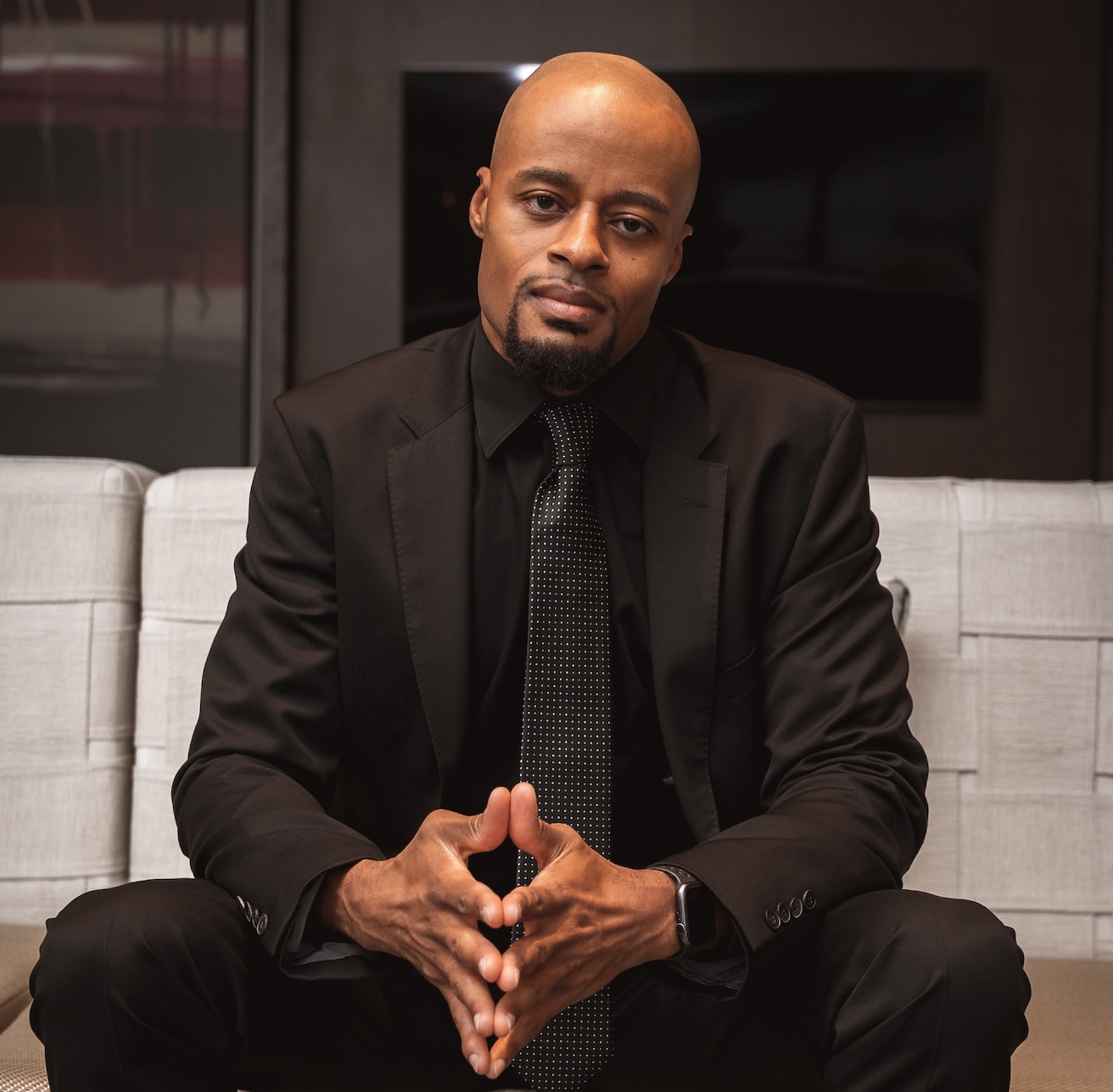




There’s a lot of advice about what to do once you get the opportunity.
How to perform. How to lead. How to negotiate. How to succeed once you’re in the room.
But what about when no one is inviting you into the room in the first place?
Dre Baldwin built a nine-year professional basketball career after playing Division III basketball, a background he knew wasn’t going to make teams automatically put him at the front of the line. Instead of pretending that disadvantage didn’t exist, he figured out what he could do outside of the basketball court to create opportunities for himself.
That same approach eventually helped him build Work on Your Game and a career teaching professionals about execution, consistency, discipline, and performance.
This conversation isn’t really about basketball. It’s about what happens when you know you’re capable, but you’re not the obvious choice.
Review the Transcript
Julie: Welcome back to the System for Everything podcast. Today’s system tip, if you’re not the obvious choice, simply become the most annoying person to ignore. Apply for the job, send the follow-up, introduce yourself, volunteer, show up, do good work, repeat until people either hire you or block your email. Please note the strategy does not work for dating, jury duty, or getting cast on the traders. Welcome everyone. This is the System for Everything, the show where we take the routines, habits, and processes behind how people actually get things done and break them down into something you can use in your own life. Today’s guest is Dre Baldwin, the founder of Work on Your Game, a framework for execution, reliability, strategic discipline, and leadership performance. A four-time TEDx speaker and a 43-time author. He helps executives and organizations operate with clarity, authority, and measurable results. Dre went from playing division three basketball to building a nine-year professional career overseas, and now works with entrepreneurs and professionals on performance, consistency, and execution. But what interested me most wasn’t the basketball career itself, it was the question underneath it. What do you do when you’re not the obvious choice? When you don’t have the connections, the resume, or the head start other people seem to have? Because most advice assumes you’ve already been invited into the room. The conversation today is about what happens when you haven’t. Welcome, Dre. Thank you for being here. Dre: Well, I’m excited to be here, Joey. Hopefully I can live up to that great introduction. Thank you. Julie: I’m sure that you will. All right, we’re gonna start as we always do with the system reboot, a quick reset to start our episode with some humor and humanity. All right, what is your go-to hype song when you need to psych yourself up before something? Dre: Hmm. Well, I always listen to music during my workouts. The go-to song? I don’t know if I have a go-to song. The song I’m listening to right now because, uh, the rapper Drake, his album just came out, so I’ve been listening to a song called Plot Twist off that album, so I’ll say that one. Julie: All right, what is your template for a perfect Saturday? Dre: Uh, wake up, work out. First thing I do, ho – try to get up relatively early. I give myself maybe an extra 30 minutes on a weekend. Then, uh, shave, shower, get dressed, and, uh, usually spending time with my young kid on Saturdays, give mom a break. Aw, Julie: I love that. All right, if you could clone one version of yourself, what role would that clone take over for you? Dre: Entering leads into the CRM, doing the follow-up, doing the CRM, uh, all the CRM stuff that I do that I don’t, and my EA doesn’t do that still needs to be done. Julie: Oh, totally. All right, everyone, you’ve met the personality. Now meet the powerhouse. Dre has built his entire career building opportunities that weren’t handed to him. From a professional career in sports to coaching high-performing professionals and entrepreneurs, his work centers on a question most of us have faced at some point. What do you do when you’re not the obvious choice? Not the most connected person, not the most experienced, not the one everyone expects to succeed. So let’s talk about how he learned to create opportunities instead of waiting for them, why consistency matters more than visibility, and what it actually takes to become someone people trust, remember, and bet on. Here’s my conversation with Dre Baldwin on the system for when you’re not the obvious choice. Okay, Dre, when most people are waiting for an opportunity, you’ve built a career around creating your own. Where did that mindset come from? Dre: Um, that’s a good question. I don’t know if there’s any one specific thing it came from. I think a good amount of it was already in me. I think the material was already in me, Joy, and I always had this natural salesperson mindset. I had a natural inclination towards entrepreneurship when it got shown to me that it, there was a thing and there was a way in. And then as an athlete being that, as you said, an introduction, I came from a humble background as an athlete, so it was not like I had a lot of teams or organizations reaching out to me to play, but I wanted to play, so I figured the only chance I would get is if I was the initiator. So it was, part of it was, I think I had some of this in me once I got the opportunity as I saw that I had some natural abilities at it. And then the other part of it was, uh, circumstance and my response to it. Julie: When you were trying to break into that professional basketball, what was something you watched other players doing that made you think, “They are waiting for somebody to discover them”? What was the point where it became undeniable that nobody was coming to pick you? Dre: Well, it was undeniable way before I was trying to make it into pro basketball because it, that was happening, happening in high school, happened in the neighborhood as a teen, happened in college. So it was already happening. And one thing that I knew was that most athletes, if you just think about the, anyone who follows sports, the mentality of most athletes is if I just keep training and getting better at my sport and I go play my sport, then people will see how good I am and then the next opportunity will come from the performance because sports is a performance and results-based business. That’s something that I’ve been telling athletes for, I’ve been telling athletes that for a couple decades. It is true, but the performance only matters if you get a chance to perform. You have to be on the stage to perform. But if you’re performing and nobody knows about it, then it doesn’t matter that you’re performing. I knew that most players at my level, so at the pro basketball level, you have in the NBA, you got 500 players, they have the G League, that’s another 200. And overseas, you have about another two to 3,000 jobs total if you’re an American who only holds an American passport. So you’re looking at less than four or 5,000 jobs worldwide and those jobs don’t all turn over every year. So there are probably 10,000 players who think they’re good enough but are not playing for, again, maybe three or 4,000 jobs, again, that are not always open. So I’m looking at the other players and I’m thinking how they would be thinking. I’ve always, again, had this ability. How is the other person thinking and what can I do to play on that strategically? I knew most players would think, okay, well, let me just show my game and that’ll be enough. But I’m looking around and saying, well, that logically doesn’t make any sense, Julie, because if there are 10,000 of us who are thinking, show my game and that’ll be enough, but there are only 4,000 jobs, there’s gonna be 6,000 people who are wrong. And again, not every job is open. So every year you might only have 800 jobs that are actually open. So how does one of us separate ourselves? Again, the player may think, well, I’m just better than the other 10,000. Now, I knew from my background, my pedigree, no one’s gonna look at me and say, this guy is clearly better than the other 10,000 because if he was, why was he playing at a division three college? Uh, he would’ve been playing at division one on TV and we would know him and he wouldn’t even be in this pool hoping to get chosen. He would already have gotten chosen. They call that the draft. Uh, hey, I would’ve been chosen at the draft. That didn’t happen. So I knew that in order for me to stand out, because I was objective enough, and this is another important point that needs to be said, I was objective enough, Julie, to look at myself. And even though I believed I was the greatest thing on a basketball court, I knew that nobody else had that opinion. And a lot of athletes don’t have that ability to step outside of themselves and admit that. I was able to admit that and say, I’m good enough, but nobody else is gonna say that. I had to do something that pushes me to the front of the line and it wasn’t gonna be on the court. I was gonna have to do something off the court. And that was when I started selling myself to get an agent. Agents are the middlemen who connect the job, oncers to the jobs themselves. And then that agent can help me get a job because the agent has the players he represents and he can put in a word for you that you can’t put in for yourself. Me just understanding that, just kinda reverse engineering, what does the rest of the world need to think for me to get this opportunity? And I knew what the rest of the world needed to think wasn’t that, oh, Dre Baldwin is just as good as, you know, Kobe Bryant or Michael Jordan. They were never gonna think that. I had to figure out how else can I get in the room knowing the limitations of my situation. Julie: I think a lot of people hear stories like yours and think, okay, that, that’s sports. But like there’s so much more because that environment has so much in common with everyday opportunities that people, more than people realize, because the reality is most of us are competing for something, clients, promotions, leadership opportunities, trust. So I wanna talk about how that translates outside of basketball. You talk a lot about consistency. What does consistency actually look like when nobody is paying attention? Dre: It is execution of structure done without variation between performances, between executions. So you have a structure in place, you execute what the structure tells you to do, you do it over and over again with very little variance in between repetitions.That’s what consistency, by definition, that’s what it means. And what keeps a lot of people from the consistency is not that they are not a disciplined person. A lot of people like to ascribe, you know, attributes like discipline to themselves or not having it to themselves. That’s a misnomer because discipline is not really a personal attribute. It’s a description of behavior. And when anyone is willing to follow a structure consistently or follow structure continuously, you get consistency. Most people will call that discipline depending on what you’re disciplined at. Some people have disciplines that they don’t wanna own, but everybody’s disciplined at something because 85% of our behaviors are unconscious and happening over and over again, also known as our habits. And our habits, they calcify into what many people call disciplines or our reputation. Again, some people are disciplined at things that they don’t wanna be disciplined at, so they don’t call it discipline. They’ll call it a bad habit, but it’s the same thing. If you have a bad habit of eating chocolate when you told yourself you’re gonna stop eating chocolate, that’s still a discipline. It’s just one you don’t wanna own, so you call it a bad habit, but it’s the exact same thing. You go to the gym every day because you said you’re going to, that’s a discipline. Most people will own that because that feels good. It feel, at least it feels good to say. It may not feel good to go to the gym every day. So that’s where consistency comes from is simply following a structure. The good news about this for everybody listening who, who feel maybe consistency challenged is that all of you, if you’re listening to this, that means you understand English, which means you can follow instructions. So if you can follow instructions, you can be a consistent and disciplined person. Julie: Can you remember the first time someone took a chance on you before you felt like you had earned it on paper? Dre: Yes. Let me tell that story? Julie: Yeah. Dre: Yeah. So I’ll tell you one on the court and one off the court, one business and one basketball. Okay, so in basketball, I was about 16 years old and I was playing on a local recreational team because I wasn’t even on the high school team at this time. This is like junior year of high school. And the team we were playing, team I was playing on, we had just lost a game and I wasn’t really involved that I was on the court playing, but I wasn’t really getting the ball up and we lost the game. And my confidence was starting to grow a little bit by this point and I felt like I could do something, but I hadn’t proved it yet on the court. And as I’m walking out of the, the building, I walked past the coach’s office and the coaches were talking to some of the other players about why we lost the game. I quipped to, towards the coaches say, “We lost the game because I didn’t get the ball enough.” And one of the coaches heard me, he said, “Dre, what’d you say?” And I said it again. I sa, “We lost the game because I didn’t get the ball enough. Now to turn and walk up.” And when we c – reconvened for practice a few days later, the coach pulled me aside and he said, “Dre, uh, yeah, you do a lot of talking about what you can do and what you’re capable of. So you know what I’m gonna do? We’re gonna give you the ball and we’re gonna find out what you actually do. We’re gonna give you a chance and let’s see what you do.” They started giving me the ball. He started giving me the ball and basketball just means they started designing a couple of plays that were made for me to get the ball and to shoot the ball. Julie: Um, first of all, how dare you think that I don’t know a lot about basketball? I played for one winter on a YMCA team when I was in eighth grade, so I was pretty good. Oh my God, I was, I was so bad. It was insane. Dre: Well, you understand it, so thank you for sharing that. I’m really speaking to the audience because I don’t know if everybody in the audience played basketball. So anyway, what happened is they started running some plays for me. They would give me the ball and I started actually converting on those opportunities. I was making shots and scoring points and I became a pivotal player on the team. And you know you’re pivotal on a team, not just because they run the plays, but because the other team is saying, “Hey, watch out for that guy. They run that play where this guy’s gonna do this when the opponent is preparing for you, that’s when you really know.” So that was one time in basketball. That was actually the first time in basketball and that gave me a lot of confidence, not only because I talked my way into the opportunity, that’s one thing, but had I said that and then been terrible, it wouldn’t matter. It was because I talked my way into the opportunity and then I delivered. So now I’ve raised my level. So now this level is my baseline that’s raising the floor. Now the, and in business, this is around the time I was about to leave basketball. It was about 2014, 2015. And I stopped playing in 2015. And I knew I wanted to go into possibly professional speaking once I found out it existed, but I didn’t know how to get into the industry. So what do you do? Who do you call? I didn’t know anything. A guy I knew who was a football player actually in NFL, he had the same idea. We met and he told me, “Hey, I’m going to this conference where everybody is a speaker. Anybody I meet there, I’ll just pass you the information.” It was actually the National Speakers Association event. And he goes to the event, he gets a phone number and a name and he passes it to me, but I didn’t see him again for weeks because I was gonna ask him, “Well, who’s the person? Did you tell them about me? Are they expecting my call?” I didn’t see the guy. So eventually I just said, “Forget it. Let me just call and I’ll just see. Hopefully they remember me. I’ll just talk my way into a conversation.” I called the woman. She had. Yeah, so she had faintly remembered that that guy mentioned me a little bit, but she didn’t know anything about me. And I could hear her because when I called her, I told her my name and she said, “What was your name?” She said, “Do you have a website?” I could hear that she was sitting at her desk because I could hear her typing as I’m saying my name. She’s typing my name and looking me up. And at the time I had a website. I was on YouTube. I had things in place. So I could hear the wheels turning in her head as we’re talking and she says, “Hey, um, well, we can, you can meet.” I’m in South Florida. So she lived in like north of Miami and she said, “We can meet at this Starbucks X, Y, Z.” So we went and met at the Starbucks. And the Starbucks meeting was supposed to be about 30 minutes. And the meeting was, “Hey, I’m this person. I used to play sports. I’m trying to get in professional speaking.” And she was a full-time professional speaker, author, coach, thought leader, basically. This wasn’t the first time somebody had come to her asking for this exact same meeting. She had done this meeting plenty of times, so she decided to meet with me. At the time, I’m using Evernote. You know Evernote? Julie, I’m sure you know Evernote. Yeah. So I used to use Evernote to take notes. So I’m sitting there, kind of how I’m sitting now, she’s sitting on the other side, so she can see the back of my laptop and I’m just typing while she’ talking. I’m ask- asked her a couple questions. She just start talking about the speaking business and need to know this and do this and oh yeah, don’t forget about this. Now just typing, typing, typing. About 30, 45 minutes into the meeting she said, “Is any of this useful for you? ‘Cause I’m not talking, I’m just typing.” And I turn around the screen and show her the notes that I’m typing and she was like blown away because I can type pretty fast. So I, I type like a secretary. So I’m basically writing down everything that she’s saying. She’s like blown away that I’m taking so many notes on what she says. And long story short, she showed me the ropes of the game. “Hey, you have this brand here. “My brand at the time, still to this day was called Work on Your Game, but it was mostly derived from my background as an athlete talking about mindset from sports and translating it to business, which is useful. That’s what I was talking about at the time, or actually not to business because I didn’t know how to do it. But she said,” I like the fact that, you know, you have a sports background. Professional organizations love sports backgrounds because teamwork, leadership, show up every day, competition, uh, setting goals, hitting quotas, everything athletes needs, professional needs, professionals need. “So she told me how you had to shape that into something that a person who’s never played sports can understand. And I followed everything that she said, and that’s how I got my speaking career going. And later on, I bring up that story and tell you the details because later on, years later, we’re still friends to this day, this woman said to me,” Hey, Dre, you know, 30 people had come to me and had that exact same meeting in that exact same Starbucks, asking the exact same questions. How do I get into the speaking business? “And I had given them the same information I gave you. And at the point that you called me, Dre, I was not going to do those meetings anymore. I told myself,” I’m not meeting with anybody else at that Starbucks because I keep meeting with people and I tell them what to do and they do. “What do they do? Nothing. They do absolutely nothing with all the information. So she was kind of starting to doubt her own information because she would give them information, they wouldn’t do anything. She said,” The only reason I decided to meet with you after I told myself I wouldn’t was because you had a website, because you had a brand name, because you were already putting videos on YouTube, you’d already written a couple of books. I saw you were an action taker. That’s the only reason I met with you because I thought you might take action. “And again, I just took everything that she said and ran with it. And she said,” You were the first person that actually did everything I told them to do, and now look at you now. “So that was the second thing where somebody gave me a chance where I hadn’t proven anything yet. Julie: Can anyone actually run your business? Like, really run it. Access the passwords, find the contracts, contact your clients, locate the invoices, figure out what to do next. Most businesses are living on one person’s brain, and that is terrifying. This episode is brought to you by The Entrepreneur’s Death Folder, the system that organizes everything your business literally cannot afford to lose. Jumping back to you mentioning the videos online, you were putting your workouts online long before personal branding kind of became so mainstream. Did people think you were crazy, self-promotional, or just like wasting your time? Dre: Only the self-promotional part. No, I don’t think people though the other ones. If they did, they didn’t tell me. So I was on YouTube before it was YouTube. So this is like 2005. Yeah. A lot of people don’t know. Google used to have a. Because Google owns YouTube now. Most people know that. But Google had their own product. It was called Google Video. They were trying to compete with YouTube, but they realized they couldn’t win, so they just bought YouTube. That’s what they did. And that’s when they started monetizing it. So I was putting videos in 2005, and it would be sporadic. Once a month, every couple months, I’d put a new video up because I had this camera and I would come record. I would record my workouts and whenever I got around to it, publish them, because who cares? I mean, it’s not like you’re making money from this. It’s not like it’s a huge fan base. There’s no business opportunity to be on YouTube in 2006, seven, eight. Around 2008, 2009, someone sent me an article of this woman, her name was Michelle Fine. Some people may remember her. She was a Asian girl who used to do makeup tutorials, and she was like the first influencer on YouTube. And this is a time Google/YouTube, now they started paying people to put videos on YouTube. Now you can monetize your content. So they had this new thing called the partner program, which is now ubiquitous. And I went and applied and didn’t get in at first, but then the second time I applied, I got in. The first time I didn’t get in because I had copyrighted music on some of my videos. So I had to take down the copyrighted music and then they let me in and now they’re saying, “Hey, when you put up a video and it’s popular, we’ll run ads on it and we’ll give you some of the money and we get some of the money.” I said, “Okay, so more videos, more money.”That’s when I started putting videos out. This is 2009. I started putting videos out every day. And I put videos out every day. I still put out videos every day, but not sports anymore. But I put videos out every day from 2009 to 2015, basketball, probably 8,000 videos. And this is not one video a day. This is sometimes I was putting out three, four videos every single day. And this is how I built up my brand and built up my audience. That actually became the foundation for the business I have today. Julie: Looking back, did you face a rejection at all that ended up helping you more than an opportunity might have? Dre: No, you kidding me? Of course. Uh, a million rejections. So let’s talk about how I got from basketball to business, because it all connects. So in basketball, I’m playing overseas. My first job was in Lithuania, and between then, Montenegro, Germany, uh, Croatia, the UK, Slovakia, Mexico, all these different places. Each year, I was on a different team. And every year, I. Uh, let’s put it this way. You know how sometimes when somebody has a job, Julie, and you quit one job because you already secured the next job? Okay, so you put in like a two-week notice or a one-month notice or you got to wait till your contract runs out, but then you know the next job is lined up. Okay, so my basketball career was the opposite of that. Uh, I never had the next job lined up. So every job I had, I had no idea what the next job was gonna be. And every time one job ended, one contract ended, the season ended, I could not tell you where I was gonna be playing the following season because I never knew. Now, that’s not how every athlete’s career goes. Some athletes, they have a five-year contract. Usually you see that in the United States. In Europe, there are some players who with continuity with the team, every year, the team will bring them back. That happens with some players. But players like me, they’re similar to, you think about actors and actresses. Of course, you have your Jennifer Anistons and your Brad Pitts. They get these big jobs and they know exactly what it is and they get to choose their contracts. But most actors and actresses, you don’t know them, you would not recognize them in the street. And in between jobs, they’re working at Starbucks, uh, because they don’t know when their next contract’s coming. So I was, I guess you could call it the fringes, but every year I had to find a new job. Many times, in between jobs, I’m reaching out to teams directly at some points. I’m reaching out to agents, and I got rejected or ignored by many more teams than I got accepted and responded to by. I got rejected or ignored by more agents than I got accepted or responded to by. So if you wanna call those rejections, I got rejected by every pro basketball team in the world at least one time, because I reached out to all of them. And I remember sending, in the summer of 2007, I sent out about 10,000 emails reaching out to teams. Now, just for clarification, there are not 10,000 teams in the world. I sent the same. I emailed the same teams over and over again, just changing the subject lines and the bodies of the emails, trying to find what works. So I was, I was split testing manually, uh, if you wanna think about what that, what that. That’s what I was doing. And e- even agents. I reached out to a ton of agents because my first agent, he left the basketball world, had to get a new agent, then a new one, then another one. Sometimes I acted as my own agent. So all of these times, things not working. At this time, I’m growing. Every year, you get a year older, right? So I’m going through my 20s. I’m getting to my mid to late 20s, and I’m like, “This is not a sustainable lifestyle that I’m living.” At the same time, I’m a man. I’m a single man. I’m meeting women in the United States, and they say, “What do you do for a living?” “I play basketball. “Where do you play at? “Oh, I play over in Europe.” “Oh, are you going back to Europe? “Yeah. When? I don’t know. When you coming back? I don’t know. All right, so this is not good for building a relationship, right? So – Yeah. Uh, so all of these things are happening. And at the same time, uh, I’m still an adult, so food, clothing, shelter has to be paid for. You don’t know when your job is coming in, that’s not a good situation to be in. I said to myself,” I need to create something that gives me some more control because when you’re an athlete, yes, it’s a great life when you’re traveling on somebody else’s dime playing a game for a living, but at the same time, you don’t control your destiny because somebody else has to say yes to you for you to go play. And if you have a couple bad games in a row, they can fire you. It happens that fast. So that’s when I started getting intentional, to your previous question, about the YouTube videos, putting the content out, getting the ad revenue. I read Tim Ferriss’ Four Hour Workweek, which I’m sure you and most of your audience are familiar with. He talks in that book about how to create a digital product and sell it. I started making $5 training programs for the players who were watching me on YouTube as they were asking me, “Can you give me a program to practice the way you do?” I started selling those for $5 a piece. When I made my first sales, Julie, I said to myself, “This right here is gonna last longer than my ability to play basketball. And this is intellectual properties based on my ability to think, which I will always be able to do, even though I won’t always be able to run fast and jump high, at least at the professional athlete level.” And that intellectual property, that’s how I knew that. I said, “This is gonna be the thing. This thing that I have online…” I remember telling someone this in 2009, 2010, “This online thing that I have, which we call personal brand now, you may call it influencing, or generating revenue, and making products, and writing books, and having a name to where people recognize you in the mall from YouTube.” I said, “This is gonna be bigger for me than basketball.” I knew it even back then. This online thing’s gonna be bigger. Didn’t know what it was called, didn’t know what it would become. Who knew that what we have now was going to exist? We didn’t know. But I knew the internet was gonna be my place. That’s where I started talking about. So I made the training programs. Players started asking me about mindset. I was telling you about the transition. So mindset. Dre, how do you show up to the gym every day and work out? I don’t always feel like it. How do you have the confidence to play in a game the way you play in practice? It’s one thing to practice by yourself, it’s another thing to play with a thousand people watching. “How’d you keep going when you got cut from your high school team? Or you say you play pro basketball, but we see these videos and you’re in an empty gym in Miami. Why aren’t you playing pro basketball? “Well, I’m waiting for the phone to ring. When’s the phone gonna ring? I don’t know. How do you keep showing up when you don’t know when the phone’s gonna ring? That’s a good question. So I started talking about things like that. Or how do you get started with all this stuff? So I started talking about discipline, confidence, mental toughness, personal initiative, setting goals, uh, moving yourself to action when you don’t feel like it. All these mindset pieces for the athletes, because they were asking. They appreciated it, but what happened here, and this is the, the key transition moment, Julie, is that people who didn’t play basketball started finding me off those videos. And they would say,” Dre, I don’t play sports, but the way you talk about mindset, that stuff applies to me. “That told me,” Okay, so here’s what I’ll do. “‘Cause I knew after sports, I wanted to do something that wasn’t sports. I’ll take the mindset piece that athletes use and I will teach it to people who don’t play sports. That’s who I’ll be after basketball. So from 2010 to 2015, I was building up that audience by talking about mindset, mindset, mindset as I was learning more about business, because again, I’m selling my programs, I start writing books, I start making courses, I start doing coaching. Now I’m learning more about business and I realized, even though I was no business guru by that point, I realized that my superpower wasn’t basketball, nor was it mindset, Julie. It was my ability to, once I understood a subject, I could break it down and articulate it and explain it better than most people. I could explain things pretty well. So as I learned more about business, I realized I could help business people because of my ability to understand their situation, digest it, and break it down and put it back together for them. That’s really what the superpower n – still to this day is. Basketball just happened to be a vehicle, entrepreneurship is a vehicle, but that was the main thing. So by 2015, when I stopped playing, I already knew exactly what I was gonna do. I just had to drop the basketball part, and here we are. Julie: What are some examples of preparation that most people tend to skip? Dre: It’s, first of all, thinking about what you’re gonna do before you do it. Uh, what are you gonna do tomorrow? So for. I would tell athletes this all the time, like, the reason I was able to make as many videos as I made, because I never showed up to the gym not knowing what I was gonna do. If you had been sitting in the car with me while I was on my way to the gym, I could tell you exactly what I was gonna record on video that day before I got there. And I would just record it and I get out of there. I was able to record th- that much content because it was planned out. So the preparation is thinking ahead of time, what are you gonna do? Like even to this day, I lay my clothes out. So I have my workout clothes laid out for the week ahead of time. I have my suits laid out, the suits, the ties, the socks. I have everything laid out for the week. Every Friday, I lay out all my clothes in my closet. It’s all laid out. So my next week of suits are already laid out. My next week of workout clothes, today’s Thursday when we’re recording this, but it’ll be laid out tomorrow. So it’s just taking that step of anything that is. You know you’re gonna need to do tomorrow, if you can do it now, do it now. Julie: How do you stay consistent when you’re not seeing those immediate results? I know in today’s world, we’re still like, “Oh, we want it now, now, now.” How do you stay consistent when you don’t have that? Dre: Mental toughness. And mental toughness is all about how you keep showing up doing your job, even though the result isn’t quite there yet, or you’re, you’re not even sure if or when the result’s gonna show up. And that whole concept is a concept that I call the third day, and it’s something I started talking about with athletes, because they would ask, “How do you show up to the gym every day, right when you don’t feel like it, when you’re tired, when you’re by yourself, you don’t know, are you working out for nothing?” And I explain to people, “Everybody shows up early the first day. Everybody shows up on the first day when it’s exciting, second day still a little exciting. By the third day, it’s a job. And by the third day, you find out if you really wanna do this or not, because it’s not all fun and games, it’s not one big party. And that’s what separates the pros from the amateurs, because a pro has to show up every day because you’re getting paid. Amateur’s not getting paid, so they have the option of not showing up. But what makes a pro a pro is that you do it every day and there’s no human on the planet who feels like doing their job every day, nobody. I don’t care what the job is. Even if it looks great from the outside, nobody feels like doing their job every day, but the pros show up and do it anyway. Julie: When you look back, what habit or behavior had the biggest long-term impact on your career? Dre: My career in sports or in business? Julie: Business. Dre: The biggest long-term impact on my career. Oh, outreach. I knock on doors. Nobody’s knocking on my door, I knock on doors, and nobody’s ringing my phone, I ring phones. Julie: I love that. I call that shooting your shot over here. I just. I feel like you can’t. Nobody can say no if you don’t give them a chance. It’s a try. Dre: That’s right. Julie: When you were getting cut from your team in high school, if someone had shown you your life today, what part would have been the hardest to believe? Dre: None of it. I knew all of this was gonna happen, and as a matter of fact, it’s, uh, 10 levels more that I haven’t gotten to yet. Julie: That’s, that’s how I feel. I love that. If listeners can take away one thing from this conversation, what is the first system that they should build this week? Dre: A system for showing up. I think it was Woody Allen who said showing up is 80% of the job. And just show up. Be in the room, be at the gym, be on the computer, be in your prospect’s email inbox, whatever it is that is showing up for you. If you have a podcast, record your show. I don’t care if you have two listeners. Now, keep showing up. Most people fail to show up, and that’s why they lose their opportunity. Julie: Uh, all right, Dre, before I let you go, please tell everyone where they can find you online, how they can learn from you, how they can work with you. Talk about your presence, your power presence protocol. Dre: Sure. So I’m on all the social media platforms. I’m public everywhere, so just look up my name, Dre Baldwin. Uh, the Power Presence Protocol is one of our main focuses these days, and that’s all for building up that discipline and that confidence and the trust that you engender from other people before you even open your mouth, because 85% of communication is nonverbal. So any of you listeners who’s ever had a challenge with executive presence or leadership skills or being able to communicate and getting people to go along with what you want. Understand it’s not a matter of you having a perfect script. It’s about everything around the words other than the words. That’s what Power Presence is about. You can learn more about that by going to powerpresenceprotocol.com. Julie: And all of that, guys, is linked in the show notes. All right, thank you so much for your time today. We have, we have spent this entire conversation talking about people who weren’t the obvious choice, the people who didn’t have the strongest resume, the most natural talent, or the clearest path forward, the people who really had to earn that trust before they earned opportunities. So, got me thinking about some fictional characters who fit that exact description, so today’s shutdown is fictional characters who were definitely not the obvious choice. First up, Ted Lasso, an American football coach hired to coach soccer in England. On paper, it’s ridiculous. But he won people over through consistency, curiosity, and genuine investment in the people around him. Number two, Neville Longbottom, because if we’re being honest, nobody looked at Neville in book one and though, yep, future hero. But he kept showing up, kept growing, and ended up playing a critical role when it mattered the most. Number three, Mulan. She literally wasn’t even supposed to be there. She started at a disadvantage, struggled early, and ultimately succeeded because she adapted, learned, and refused to quit. I think everyone thinks of number four for this category, Elle Woods. Everyone underestimated her. Everyone assumed she didn’t belong. And instead of trying to become someone else, she succeeded by doubling down on her strengths and proving that people had misjudged her from the beginning. And finally, number five, Tina Belcher, my dark horse pick. Tina is awkward, uncomfortable, and almost never the coolest person in the room, but she is unapologetically herself relentlessly persistent and somehow keeps fo – moving forward no matter how many times life embarrasses her. If you enjoyed today’s episode, I’d love it if you take a moment to subscribe, leave a rating, and share it with a friend who needs to hear it. You can find all the links and resources we mentioned in today’s show notes. And if you’ve ever felt like you’re not the obvious choice in the room, I hope this conversation reminded you that the people who last aren’t always the people who start with the biggest advantage. They’re usually the people who keep showing up long enough to earn the opportunity. See you next week.
This episode is brought to you by The Entrepreneur’s Death Folder:
If something happened to you tomorrow, would the people you love know what to do?
The Entrepreneur’s Death Folder helps you organize the important information someone would need to step into your life or business if you couldn’t.
Because taking care of people isn’t only about the big things. Sometimes it’s making sure they don’t have to hunt for the Wi-Fi password during the worst week of their life.
Being good isn’t always enough to get noticed
One of the most interesting distinctions Dre makes is that performance only matters once you have the opportunity to perform.
As a basketball player, he knew he could keep getting better. But he was also realistic enough to understand that his Division III background wasn’t going to make teams assume he was better than thousands of other players competing for a limited number of professional jobs.
So he stopped relying solely on what happened on the court.
He started thinking about what needed to happen to get himself onto the court in the first place.
That meant contacting agents, reaching out directly to teams, and finding ways to move himself toward the front of the line instead of waiting for someone else to notice him.
Consistency is something you build, not something you are
Dre defines consistency as repeatedly executing a structure with very little variation.
That matters because we tend to talk about discipline and consistency like personality traits. You either have them or you don’t.
Dre sees them as behaviors.
If you can create a structure and follow it, you can become more consistent.
That takes some of the morality out of the conversation. You don’t need to become a fundamentally different person. You need something repeatable enough to follow when you’re tired, distracted, bored, or not particularly inspired.
Sometimes the work you’ve already done gets you the meeting
One of my favorite stories from this episode happens at a Starbucks.
When Dre was trying to break into professional speaking, he was given the contact information for an established speaker. He called her without even knowing whether she was expecting to hear from him.
She agreed to meet.
Years later, she told him she had already decided she was done having these kinds of meetings. She had sat in that same Starbucks with around 30 people asking the same questions about becoming professional speakers. She gave them advice, and they did nothing with it.
The reason she made an exception for Dre?
Before meeting him, she looked him up.
He already had a website. He had a brand. He was publishing YouTube videos. He had written books.
She could see that he was someone who took action.
And after their meeting, he did what she told him to do.
The opportunity may have looked like someone taking a chance on him, but Dre had already given her a reason to believe the chance was worth taking.
The third day is where consistency actually starts
Everybody can show up on day one.
Day one is exciting.
Day two still has a little momentum behind it.
Dre calls what happens next “the third day.”
By the third day, the novelty has worn off and the thing you were excited about has started to feel like a job.
That’s where he believes the distinction between professionals and amateurs begins.
It’s not that professionals magically want to do the work every day. They don’t.
They’ve simply built the ability to show up when they don’t.
Prepare for tomorrow before tomorrow gets here
Dre’s approach to preparation is almost aggressively simple:
If you know you’re going to need to do something tomorrow and you can prepare it today, do it today.
When he was filming basketball videos, he never arrived at the gym wondering what he should record. He knew before he got there.
Today, he lays out an entire week of workout clothes, suits, ties, and socks in advance.
It’s not glamorous.
That’s exactly why I like it.
Sometimes a system isn’t a complicated workflow or a fancy app. Sometimes it’s just removing one more decision from the person you’re going to be tomorrow.
Connect with Dre Baldwin and Links From the Episode